
LARGE-SCALE HOUSING MAINTENANCE PROJECTS
Carrying out maintenance works on large housing schemes?
If your work involves repairing roofs, loft spaces, façades, or building fabric at scale, nesting birds and roosting bats are a serious risk to programme that can easily be avoided. We deliver targeted protected species surveys across housing stock to address this problem directly.
Bats and birds are strictly protected under the Wildlife and Countryside Act 1981. This protection includes disturbance to roosting bats and damage or destruction of roosts and nests. Failure to consider these risk can result in:
fines of up to £5,000 per bat;
criminal prosecution; and
project delays, stop notices, and reputational damage.
We specialise in bat and bird surveys [Stage 1 and Stage 2] specifically designed for large-scale housing maintenance programmes. We focus on early-stage risk identification, enabling works to proceed with clarity and control.
Risks quantified. Programme secured.
assessments we offer
pra
(Stage 1)
Preliminary Roost Assessments are the first stage in understanding the ecological risks associated with your housing stock project. Our consultants conduct an external inspection of each dwelling and digitally record potential programme constraints. Results are presented in sharp, colour-coded figures for supply-chain wide clarity.
emergence
(stage 2)
Dusk emergence surveys are next stage of the assessment process, should any risk factors be identified during the PRA assessment. Our expert consultants deploy bat detectors, infra-red cameras and night-vision aids to conclusively determine if roosting bats are a risk to your programme.
drones
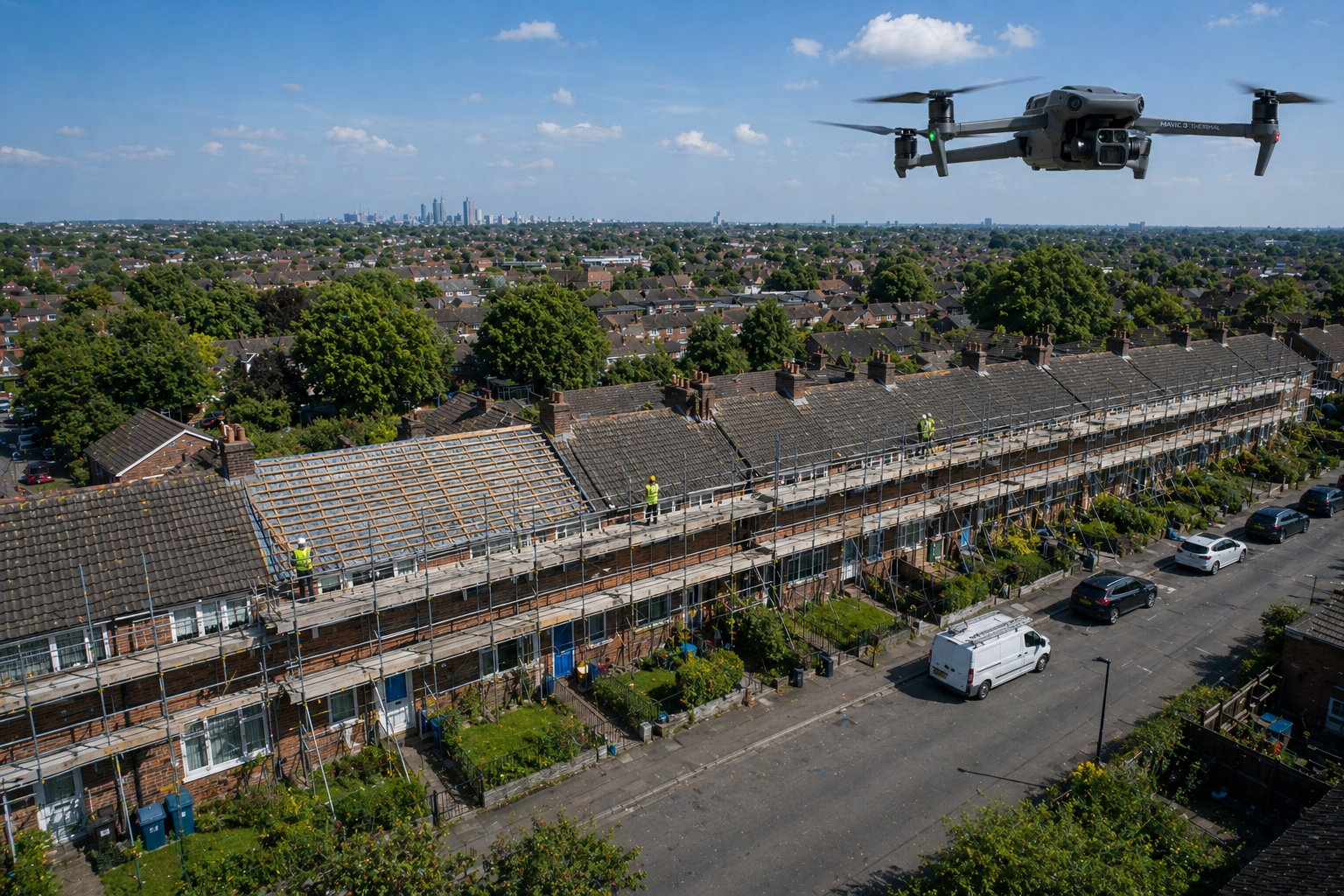
Our drone pilots can inspect buildings (safety from the ground) that would otherwise be difficult to access; ruling out constraints and speeding up your programme. Thermal imaging drones hover above project sites to capture high-resolution thermal video, improving data robustness and reducing boots on the ground.
DIDN’T FIND THE assessment YOU WERE LOOKING FOR?
ask AND WE’LL respond WITHIN 24 HOURS
What is a Stage 1 Preliminary Roost Assessment?
A PRA represents ‘Stage 1’ of the bat survey process for large-scale housing works. An Ecological Consultant carries out a detailed external inspection of each dwelling utilising drones, binoculars and a high-powered torch. Potential Roosting Features (PRFs) including raised roof tiles, damaged soffit boxes and missing mortar are digitally recorded. Fresh signs of bats, including: droppings, staining and feeding remains are also searched for. This assessment can be undertaken at anytime of the year.
Based on these findings and relevant contextual information e.g. the suitability of the surrounding landscape (e.g. urban, rural) each dwelling is assigned a low, medium or high classification following Bat Conservation Trust guidelines. This classification directly influences the recommended number of ‘Stage 2’ dusk emergence surveys that should be conducted at each dwelling. Low = 1 survey visit; Medium = 2 survey visits and High = 3 survey visits.
What is a Stage 2 Dusk Emergence Survey?
A Dusk Emergence Survey represents ‘Stage 2’ of the bat survey process for large-scale housing works. Ecological Consultants equipped with thermal and infra-red cameras (Night Vision Aids) are positioned at strategic points around each dwelling with the express objective of recording (or ruling out) bats emerging from the structure. Specialised bat detectors decode echolocation calls to identify species. The optimum survey window for dusk emergence survey is between May and September, inclusive.
The number of survey visits required at each dwelling is determined by the risk classification assigned during the Stage 1 assessment — one visit for low-risk dwellings, two for medium-risk, and three for high-risk — ensuring the level of survey effort is proportionate to the likelihood of bats being present. Where roosting bats have been ruled out, we will communicate this within 48 hours to remove any blockers to programme.
Why are Bats and Birds a Risk?
The UK supports 18 native species of bat, many of which breed within the built environment. Residential buildings often support roosting bats and nesting birds:
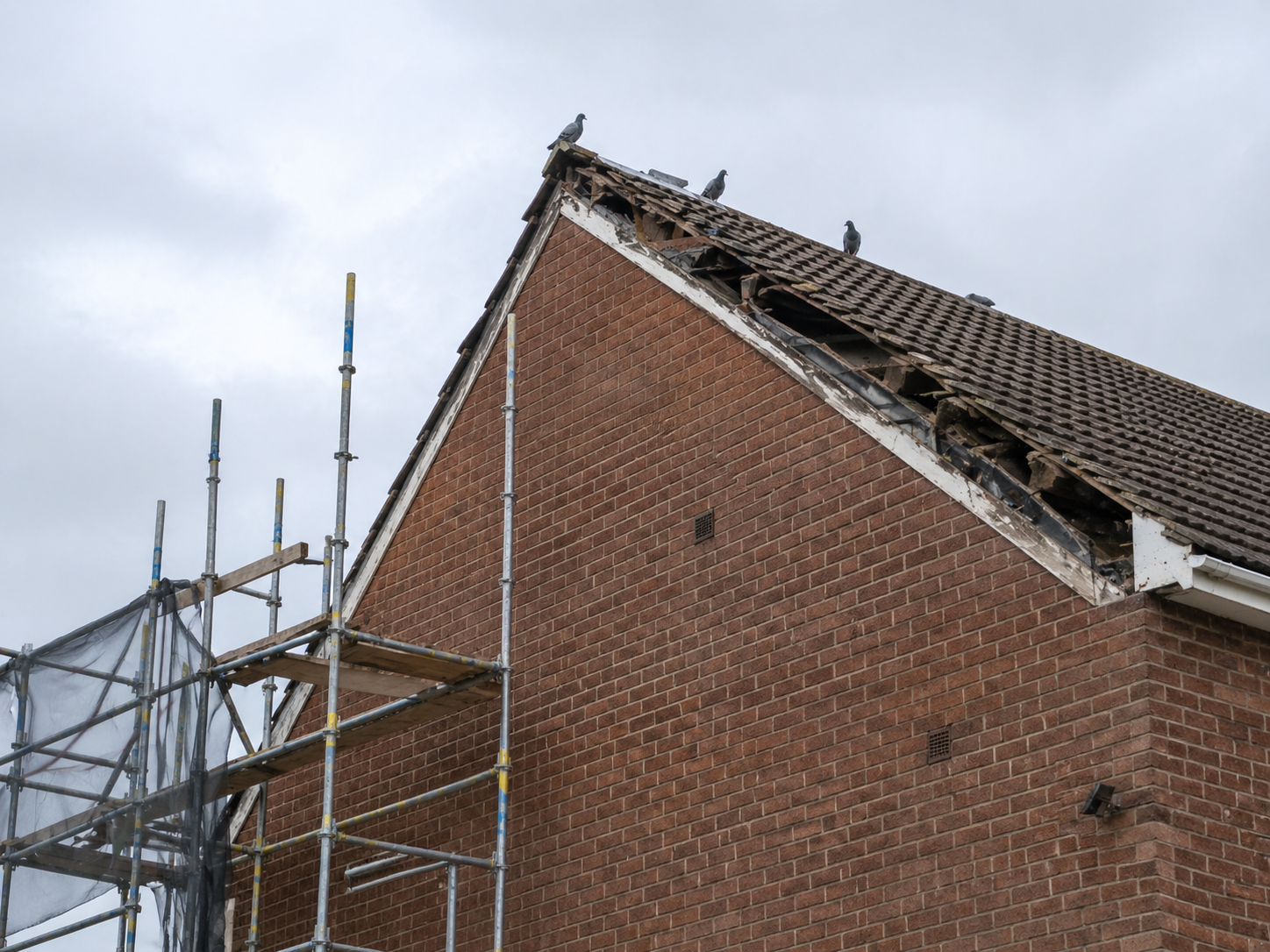
under roof tiles, fascias, soffits and window sills;
within roof voids, loft spaces and cavity walls; and
behind damaged brickwork.
Bat roosts are cryptic and often cannot be confirmed through external visual inspection alone. In addition to roosting bats, nesting birds are also commonly found with residential structures. Our survey methodology accounts for both groups, ensuring that all relevant ecological constraints are identified prior to works commencing.
Legal Considerations
Bats are strictly protected under the Wildlife and Countryside Act 1981 (as amended) and the Conservation of Habitats and Species Regulations 2017 (as amended). This protection includes disturbance to roosting bats and damage or destruction of roosts. Failure to comply can result in:
fines of up to £5,000 per bat;
criminal prosecution and imprisonment; and
project delays, stop notices, and reputational damage.
Similarly, all wild bird species in the UK are protected from killing and injury, including feral pigeons. In addition, their nest, eggs and young are also protected from damage and destruction.
Being unaware is not a defence. These risks can apply to those commissioning and undertaking the works; so if you’re unsure, request a survey before proceeding.
Smarter, Faster Solution
Turing Bioscience delivers bat surveys specifically designed for large-scale housing maintenance programmes. We focus on early-stage risk identification, enabling works to proceed with clarity and control. Lesser consultants apply generic or overly precautionary survey methodologies, resulting in unnecessary survey effort, extended timelines, and inflated costs. Our approach is different:
We apply proportionate, guidance-aligned methodologies combined with modern survey technologies, including:
infrared and thermal imaging systems; and
efficient survey design based on project type and scale.
This allows us to significantly reduce survey durations and associated costs, while maintaining full compliance. By operating with smaller, highly skilled survey teams, we also reduce:
on-site disruption; and
public interaction risks; with less opportunity for health & safety incidents.
For nesting birds, we take a pragmatic and legally robust approach. Where applicable, we utilise General Species Licences to enable the controlled removal of certain pest species, avoiding unnecessary delays that would otherwise extend works for weeks or months.
Clear & Rapid Reporting
Our technical outputs are designed for rapid decision-making on site.
concise, colour-coded reports; and
clear identification of dwellings that can proceed immediately, and those requiring further consideration.
High-level outputs are delivered within 48 hours of survey completion, ensuring your programme maintains momentum.
Risks quantified. Programme secured.